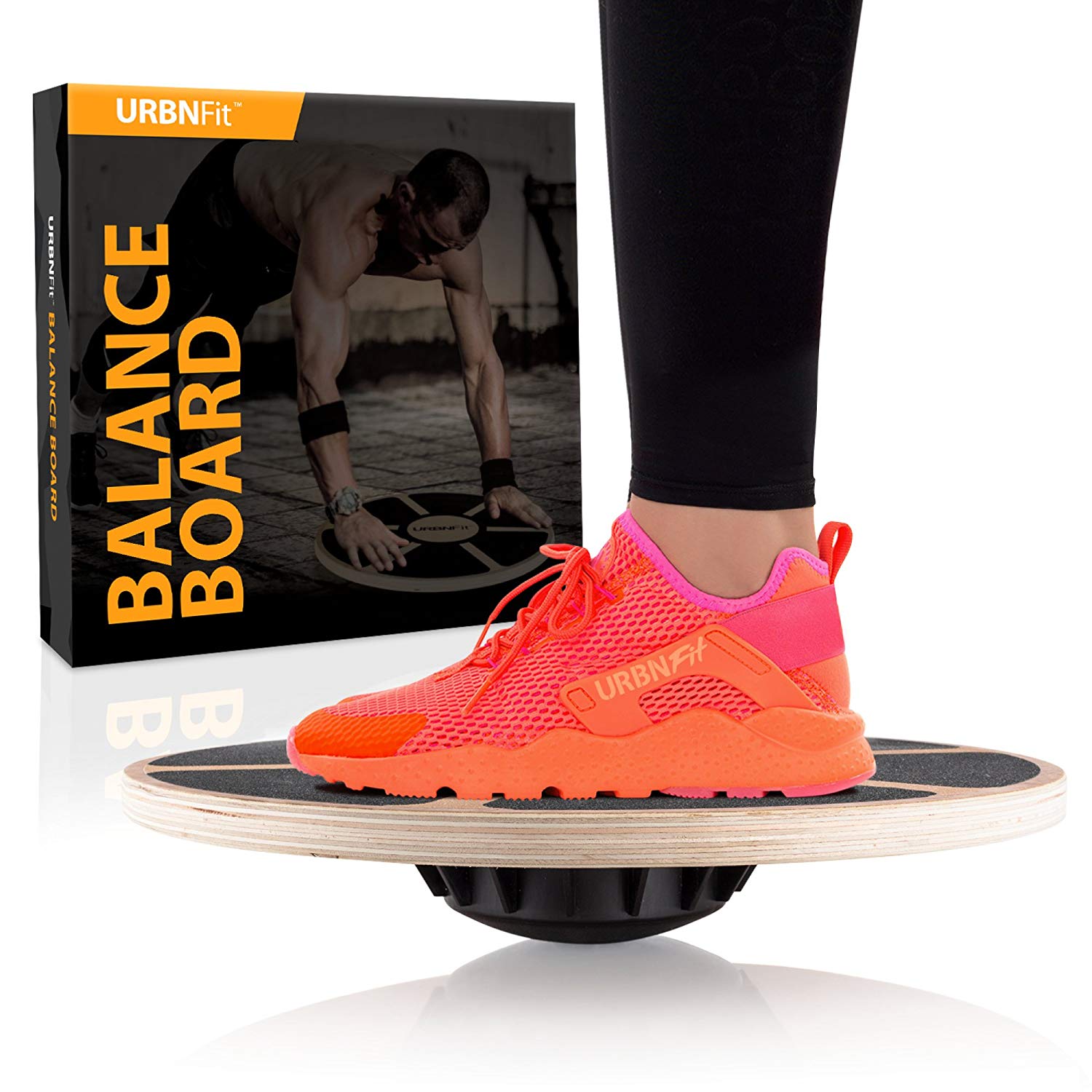

You might not be familiar with this weird and simple, yet effective device – but you definitely should be! Originally created for surfers, the URBNFit Balance Board Core Trainer is a complete fitness studio of its own. Designed to make balance training fun and affordable to all, it promises fantastic results. The URBNFit Balance Board Core Trainer will help strengthen your lower back and increase your balance and coordination!
Balance is something most of us take for granted, but there are times when a person’s balance might be thrown off and this can have a pretty serious negative effect on your life, even doing the most mundane tasks. Running, walking, or even simply standing around can become a challenge, and possibly even painful. Using a device such as the URBNFit Balance Board Core Trainer regularly can and will definitely improve your balance and core strength when used properly.
SAFETY FIRST
Whenever you perform any type of exercise, you should always take special care to use proper form and practice safety measures to reduce your chances of getting hurt, while simultaneously getting the most effective workout. Balance training on the URBNFit Balance Board Core Trainer can be really fun and extremely easy for anyone to do, but the necessary precautions should always be taken in order to have a safe and effective workout.
- Always set the balance board on a dry, flat surface. If you’re just starting out, you might even want to place it on a carpet or on a workout mat to prevent it from slipping out from under you when you go to step on it. Make sure you have a good amount of clearance around you, because you will most likely wobble around a bit the first few times you use the board, and you might have to step off the board quickly to avoid falling over.
- If you feel like you might fall off, don’t try to hold on – quickly step off and regain your balance before getting back on. Initially you might also consider asking someone to stand close and help you, or stand close to a wall or next to a chair for support until you can regain your balance.
- Proper form is very important when using a balance board, both for safety reasons and for effectiveness. Maintaining a vertical spine is vital to the overall wellness of your body. Keep your back straight, shoulders back, head up, eyes forward, and bend your knees slightly.
- Most importantly, take your time and exercise at your fitness level!
If, for whatever reason, you experience any sort of pain or discomfort while using the balance board, you should stop right away. Be sure to talk to your doctor, physical therapist, or other medical professional prior to starting any exercise routine.
BENEFITS OF BALANCE BOARDS:
STABILITY
Daily use of the balance board will help you achieve a greater stability of your trunk and pelvic muscles. This can have many health benefits for people of all ages and abilities. Balance training is especially beneficial for dancers and gymnasts, helping them achieve greater stability. Having stability and core strength is essential in being able to perform and maintain proper form and grace, and can help prevent injuries.
CORE STRENGTH
When standing on a balance board, you are engaging your core muscles. By challenging your body’s balance system, you work out these core muscles which can improve your overall body awareness. Core strength also goes hand in hand with good posture! Good posture can help offset the back and neck strain caused by sitting at our computer desks all day. Doing those things promotes bad posture and can contribute to bad balance. Balance training helps your body to remember proper form and helps strengthen the core muscles and help in keeping good posture, by keeping your spine in alignment.
FUNCTIONAL STRENGTH
Regular balance board training will also help you improve your functionals strength. Without even thinking about it, balance training will not only help train your core muscles, but also tones and shapes your lower back and obliques. By simply standing on the balance board and doing some basic movements, you are improving your lower body strength.
MENTAL FOCUS
When you challenge your center of gravity, you are working both halves of your brain together so that they communicate with the rest of your body. Performing balance exercises while standing on the balance board can help improve coordination.
EXERCISES TO TRY
BALANCE
Simply standing on the balance board can be an effective exercise because it strengthens the muscles of your lower legs, and is also great for your ankles. Stand on the balance board with your feet placed shoulder-width apart and your hands hanging loosely at your sides. You can also hold on to a chair, a wall, or a person if you feel like you need additional support at first. Hold your balance on the board without letting the edges touch the floor. Try and hold your balance for a few minutes, or as long as you can.
SIDE TO SIDE TAPS
Once you’ve mastered standing on the board, you can progress to slowly leaning back and forth, and then side to side, keeping your balance so that the side of the board touches the ground. Repeat this for a few minutes.
BALANCING SQUAT
Begin with your feet shoulder-width apart, and stand on the balance board with your legs straight. Once you have your balance, move as if you were going to sit down, making sure to keep your head and shoulders straight. Engage your core muscles to keep you from falling, and sink into a squat position, with your knees at a 90 degree angle. Then slowly straighten your legs and return to a standing position. Make sure to go slowly so you don’t lose your balance, and keep proper form.
BALANCE BOARD PUSH-UP AND TRICEP DIPS
Balance boards are also great for adding a little variety to the standard push-up! Adding a little instability boosts its challenge and helps make it a more effective exercise! When first attempting, you might want to try on all four, for maximum stability, and then slowly progress to extending your legs. Also begin with short push-ups while you get accustomed to the instability, and work your way down slowly. You can also try tricep dips, using the same controlled movements.